
Understanding OBD-II Code P0115: Engine Coolant Temperature Sensor 1 Circuit Malfunction
When your vehicle logs the trouble code P0115, it signals a problem with the Engine Coolant Temperature (ECT) Sensor 1 circuit. This OBD-II code indicates the Powertrain Control Module (PCM) is detecting an erratic, unusually high, or low voltage from the ECT sensor circuit, making it unreliable.
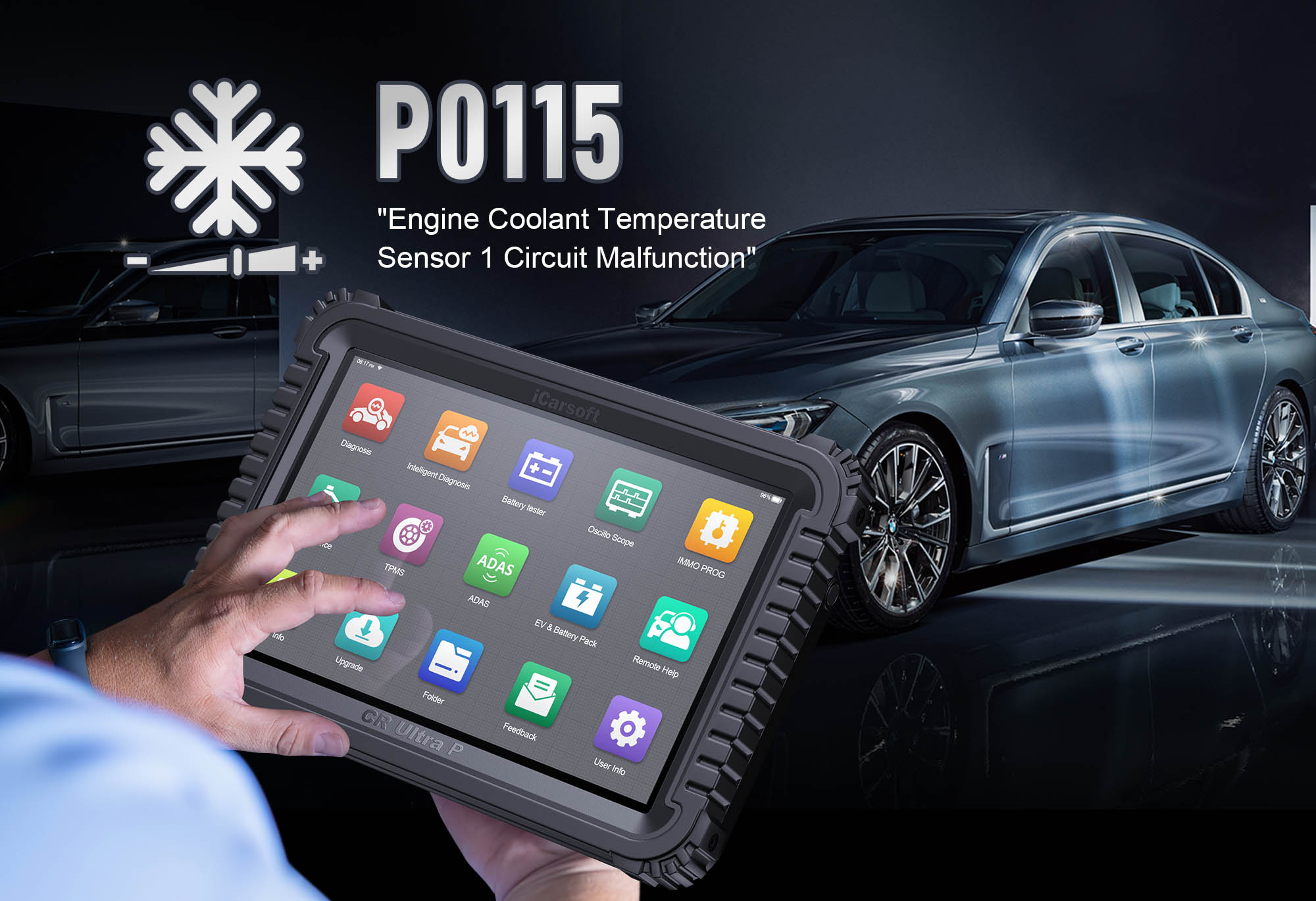
What Does P0115 Mean?
- P0115: Engine Coolant Temperature Sensor 1 Circuit Malfunction.
- Triggered when the PCM senses voltage outside expected parameters—e.g., open circuits, shorts, or erratic signal readings.
- The “1” refers to Sensor 1—typically used for engine management (not driver display).
Common Symptoms of P0115
- Check Engine Light (MIL) is illuminated.
- Hard starts, especially in cold weather, accompanied by poor fuel economy
- Engine runs excessively rich or lean, affecting drivability and emissions.
- In severe cases, engine overheating or erratic gauge readings may occur
Top Causes of the P0115 Code
| Cause | Description |
|---|---|
| Bad ECT sensor | Sensor thermistor failure causing erratic resistance |
| Open/shorted wiring | Damaged harness or pins causing voltage issues |
| Connector problems | Corrosion, loose contacts, or moisture entry |
| Low/contaminated coolant | Air pockets or dirt distort temperature readings |
| PCM fault | Uncommon, but failed control module can misinterpret signals |
Diagnosing the P0115 Code
A reliable repair begins with pinpointing the underlying issue:
-
Scan and record freeze-frame data
Capture conditions when the code triggered
-
Visual inspection
Focus on the sensor, connectors, and cooling system
-
Test sensor resistance
Expect roughly 10 kΩ at –10 °C, 2.5 kΩ at 20 °C, 300 Ω at 80 °C
-
Circuit testing
Confirm 5 V reference and ground continuity at connectors
-
Coolant & thermostat check
Top up or replace fluid, purge air
-
Replace parts as needed
ECT sensor, wiring, or in rare cases—PCM
Fixing the P0115 Code: Best Practices
- Replace a faulty ECT sensor if diagnostics show it’s out of spec.
- Repair or replace damaged wiring and connectors to restore reliable signal flow.
- Flush and refill coolant, ensuring correct mixture and air-free system.
- Clear the code and take a test drive to ensure it doesn’t return.
Fuel economy and emissions often improve immediately after resolution.
Diagnostic Tools for P0115
Effective troubleshooting of P0115 benefits from advanced diagnostic features:
Monitor ECT readings in real-time and access freeze-frame conditions
Detect open circuits, shorts, or voltage irregularities in the ECT circuit
Test cooling fan operation, monitor coolant flow, and run active system tests
Clear codes after repairs and verify system integrity with follow-up scans
Final Thoughts: Don’t Ignore P0115
Leaving P0115 unhandled risks:
- Poor engine performance, increased fuel costs, and possible catalytic converter stress.
- Engine damage from overheating or running too rich/lean.
- Failing an emissions test due to improper operating temperature.
Fix it early: Use systematic diagnostics to identify and resolve the root cause, ensuring your engine operates at optimal temperature.