
P0133 Code: A Comprehensive Guide to Oxygen Sensor Circuit Slow Response (Bank 1 Sensor 2)
As an automotive technician or DIY enthusiast, encountering the diagnostic trouble code P0133 can be perplexing. This code—Oxygen Sensor Circuit Slow Response (Bank 1, Sensor 2)—triggers when the downstream oxygen sensor (located after the catalytic converter on Bank 1) responds too slowly for the powertrain control module (PCM) to receive timely data. In this guide, we’ll break down what P0133 means, its causes, symptoms, safety implications, and how to fix it—plus, we’ll highlight a tool to simplify diagnosis.
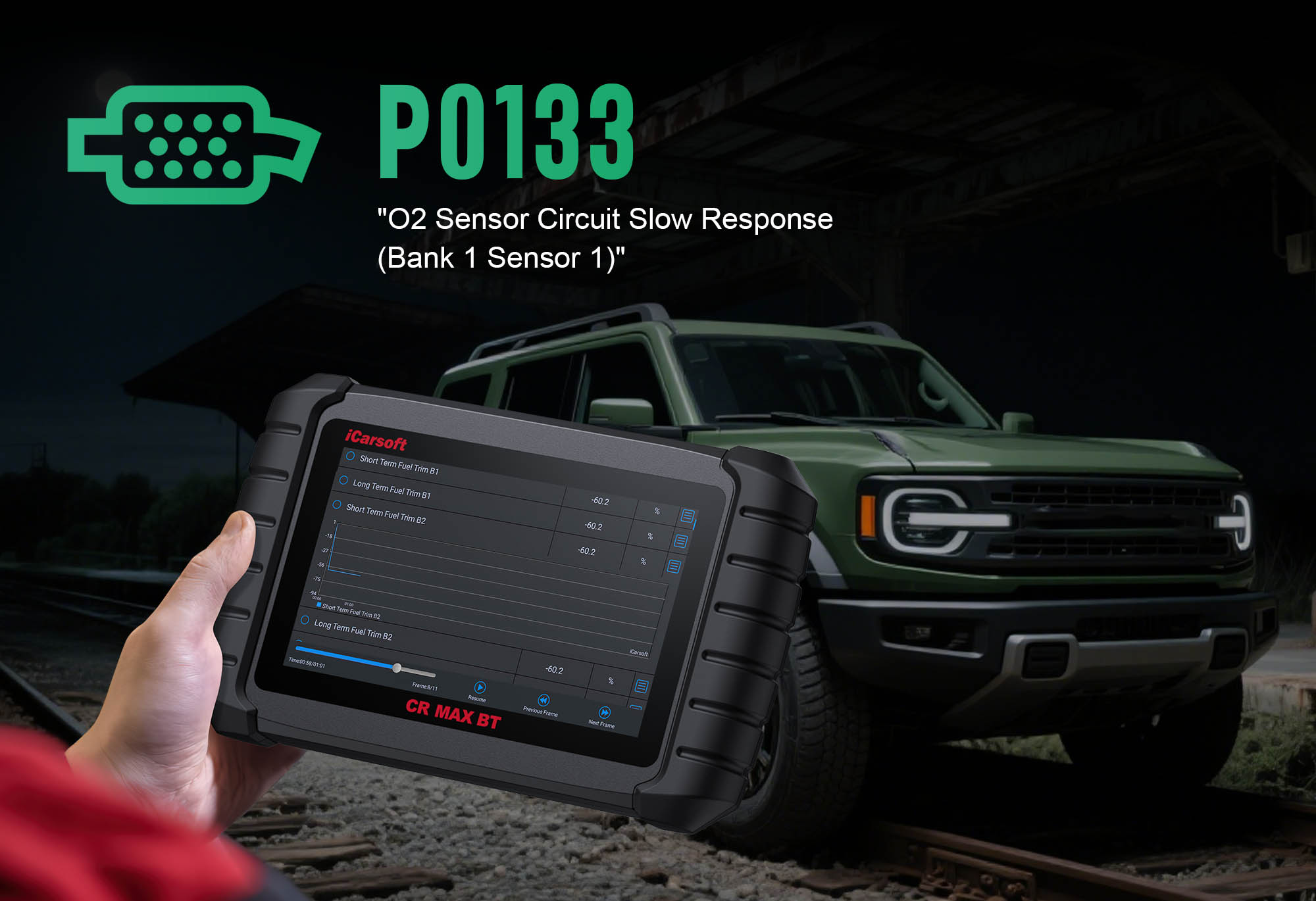
What Does the P0133 Code Mean?
The PCM (powertrain control module) relies on oxygen sensor readings to fine-tune the engine’s air-fuel mixture in real time. There are two key oxygen sensors in most vehicles:
- Upstream sensor (Bank 1 Sensor 1): Located before the catalytic converter, it provides rapid signal switches to adjust the air-fuel ratio.
- Downstream sensor (Bank 1 Sensor 2): Located after the catalytic converter, it monitors the converter’s efficiency and has a slower natural response rate.
Common Symptoms of P0133 (Slow Oxygen Sensor Response)
- Check Engine Light On: The most immediate indicator—your dashboard’s Check Engine Light will illuminate to signal the PCM’s detected fault.
- Reduced Fuel Economy: A slow-responding O₂ sensor disrupts air-fuel mixture adjustments, causing the engine to burn more fuel than necessary.
- Rough Idle or Uneven Performance: The engine may shake, vibrate, or run inconsistently when stopped (e.g., at traffic lights) or during low-speed operation.
- Hesitation During Acceleration: The vehicle may feel unresponsive or “sluggish” when pressing the gas pedal, especially during quick acceleration.
- Failed Emissions Tests: Since the downstream sensor monitors catalytic converter efficiency, a slow response often leads to超标 (excessive) emissions.
Common Causes of P0133
| Cause | Description |
|---|---|
| Aging/Contaminated Oxygen Sensor | Over time, the downstream sensor’s ceramic element clogs with carbon, oil, or coolant, slowing its ability to detect oxygen levels. |
| Exhaust Leaks | Leaks in the exhaust system (before/after the sensor) introduce outside air, skewing the sensor’s readings and causing slow response. |
| Faulty Wiring/Connectors | Corroded, loose, or frayed wires in the sensor’s circuit interrupt voltage signals, delaying communication with the PCM. |
| Vacuum/Intake Leaks | Leaks in the intake manifold or vacuum lines disrupt the air-fuel mixture, forcing the downstream sensor to compensate (slowing its response). |
| Malfunctioning Upstream Sensors | A faulty upstream O₂ sensor or MAF (mass airflow) sensor sends incorrect data to the PCM, leading to downstream sensor delays. |
| PCM/Coolant Temp Sensor Faults | Rarely, a glitch in the PCM or a faulty coolant temperature sensor disrupts the sensor’s operating parameters, causing slow response. |
Is It Safe to Continue Driving with P0133?
Generally, P0133 is not immediately critical—most vehicles remain drivable for short distances. However, prolonged driving with this code carries risks:
- Reduced fuel economy (costing more at the pump).
- Potential damage to the catalytic converter (from unburned fuel entering the exhaust).
- Increased emissions (risk of failing state inspections).
How to Fix P0133: Step-by-Step Guide
-
Scan and Verify the Code
Use an OBD-II scanner (like the iCarsoft CR MAX BT) to confirm P0133. Check for related codes (e.g., P0132 for high sensor voltage) and review live data to observe the sensor’s response rate.
-
Inspect Wiring and Connectors
Locate the Bank 1 Sensor 2 (downstream) and examine its wiring harness. Clean corroded connectors with electrical contact cleaner; repair/replace frayed or broken wires.
-
Check for Exhaust/Vacuum Leaks
Inspect the exhaust system (pipes, gaskets, catalytic converter) for leaks using a smoke machine or soapy water. Check the intake manifold and vacuum lines for cracks or loose connections.
-
Test Upstream Sensors
Use a scanner to test the upstream O₂ sensor (Bank 1 Sensor 1) and MAF sensor. Ensure their signals are consistent—replace faulty sensors to prevent downstream compensation.
-
Clean the Downstream Sensor
If the sensor is less than 5 years old, clean its ceramic element with a specialized O₂ sensor cleaner (avoid abrasives). Let it dry completely before reinstalling.
-
Replace the Downstream Sensor
If cleaning fails or the sensor is older than 5–7 years, replace it with an OEM or high-quality aftermarket sensor. Ensure it matches your vehicle’s make/model.
-
Clear the Code and Retest
Use the scanner to clear P0133, then drive the vehicle for 50–100 miles. If the code doesn’t return, the issue is resolved; if it does, consult a technician for PCM testing.
Diagnose P0133 Like a Pro with iCarsoft CR MAX BT
The iCarsoft CR MAX BT simplifies diagnosing P0133 and other oxygen sensor issues with OE-level functionality tailored for enthusiasts and professionals:
Streams real-time voltage and response rate data for Bank 1 Sensor 2, letting you visualize slow signal switches that confirm P0133.
Built-in O₂ sensor tests compare the downstream sensor’s performance to manufacturer specs, eliminating guesswork about whether it needs cleaning or replacement.
Detailed diagrams show exactly where Bank 1 Sensor 2 (and related components) are located in your vehicle (from Ford to Honda), simplifying inspections.
Tests upstream sensors (O₂, MAF), exhaust system, and PCM to rule out secondary causes—critical for avoiding repeated P0133 triggers.
Connects via Bluetooth to your smartphone/tablet, letting you monitor sensor data while driving (no need to stay tethered to the OBD port).
In Summary
P0133 (Oxygen Sensor Circuit Slow Response, Bank 1 Sensor 2) is a common issue tied to downstream sensor inefficiencies, but it’s manageable with systematic diagnosis. By addressing causes like contaminated sensors, exhaust leaks, or faulty wiring early, you’ll restore fuel economy, protect your catalytic converter, and pass emissions tests.
The iCarsoft CR MAX BT is your key to efficient troubleshooting—its live data, O₂ sensor tests, and component guides eliminate guesswork, helping you fix P0133 quickly and confidently.